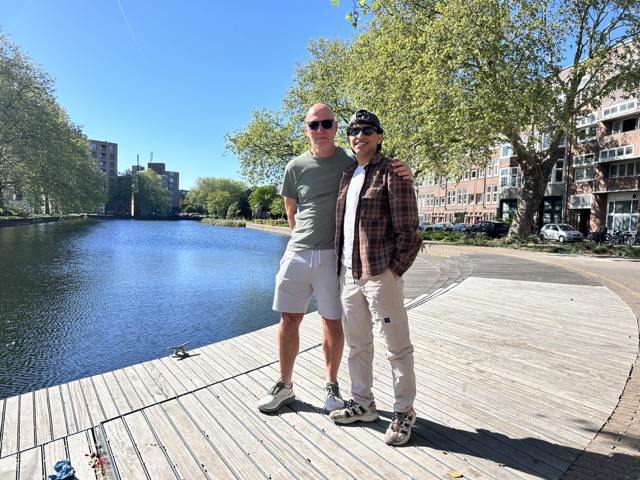
Abdulaziz lives with his wife and two children, aged seven and eight, in Rotterdam. In Yemen, he worked in his own garage for years. "Cars are the same everywhere," he says with a laugh. "But here they ask for diplomas and certificates, and I only had experience."
In the Netherlands, that experience didn't count for much with employers. Applying for jobs was different than what he was used to. "In Yemen, a lot happens through personal connections. Here, everything has to be done via the computer." Although his Dutch is improving every day, the language barrier was also an obstacle in finding a job.
Duo for a Job
At VluchtelingenWerk, he read about Duo for a Job, an organization that pairs people aged 18 to 33 with a migration background with volunteer mentors over the age of fifty. Together, they meet for about two hours a week for six months to take steps toward finding work, education, or an internship.
The initiative started thirteen years ago in Belgium and has now been operating in Rotterdam for five years. About 450 young people have already received guidance there. Now they are launching in Utrecht, where Van der Linden from Culemborg will be active as a mentor.
He signed up as a mentor in Rotterdam after he retired. "I come from an education background and wanted to continue to be of value," he says. "In my hometown of Culemborg, there are also buddy programs, but what appealed to me about this one is the approach: mentors receive extensive training and ongoing support."
Hidden discrimination
This training covers topics such as communication techniques, cultural differences, and legislation. "Once you're involved, you really form a network with other mentors. This makes it easy to draw on each other's knowledge and contacts." That is how he was able to be paired with Abdulaziz, even without knowledge of automotive technology.
He is the fourth person Van der Linden has mentored, and they hit it off immediately. "It started with figuring out exactly what he can do and wants to do, and creating a CV," the mentor explains. The mentor suggested that Abdulaziz do an internship at a garage to show what he was capable of. Eventually, he found a spot, but it wasn't easy.
"As soon as you tell them who it's for, you sometimes suddenly hear that there are no spots left. You notice that hidden discrimination exists," he explains. Abdulaziz cautiously agrees. "People sometimes look at me differently," he says. Still, he remains positive. "I really want to adapt. Fortunately, many people are friendly."
The necessity
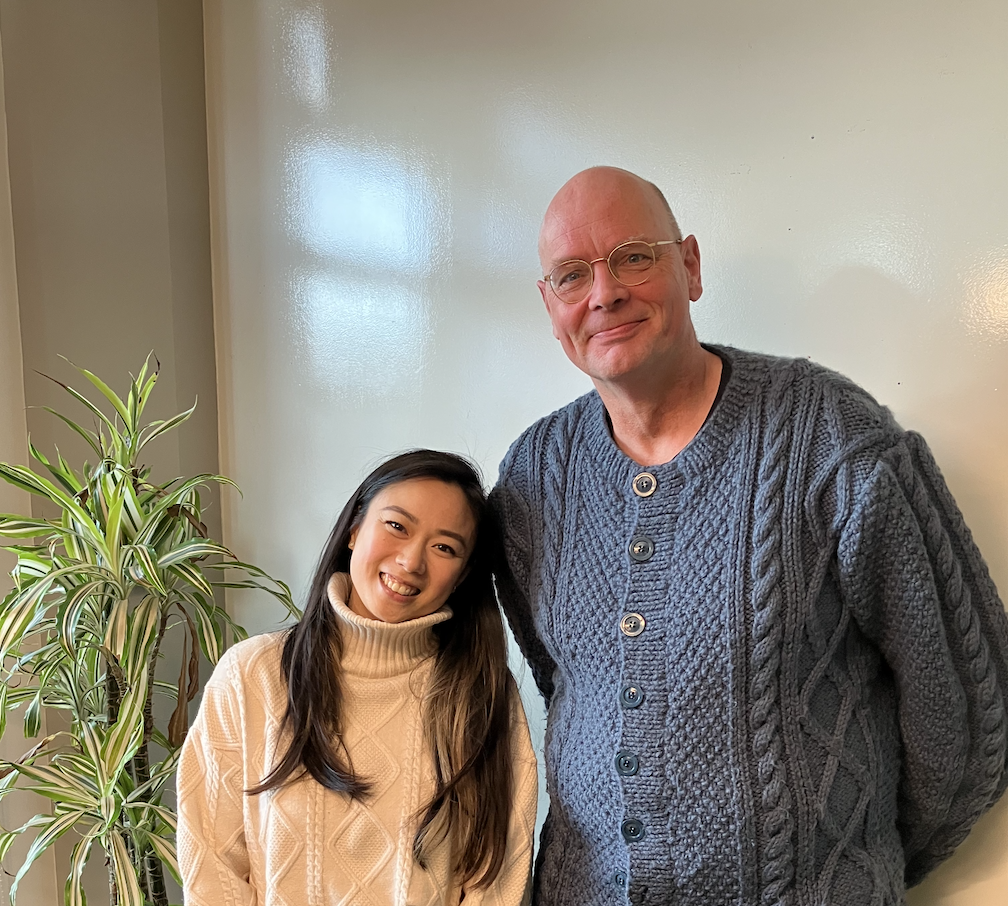
According to Jessica de Jaeger, regional manager in Utrecht, Abdulaziz's experience underscores why Duo for a Job is necessary. "There is a huge staff shortage, while there is high unemployment among people with a migration background. First, second, and third-generation migrants can all get stuck due to language barriers, unfamiliarity with the labor market, or inequality of opportunity."
The first programs will start in Utrecht this summer. In addition to Van der Linden, seven mentors have already signed up. De Jaeger hopes that more will follow soon. The outcome of the program for Abdulaziz is a training course in automotive technology to increase his chances of finding a job.
Staying in touch
In addition, he continues to learn Dutch. The fact that his children go to school here helps him with this. "I learn from them too," Abdulaziz says with a laugh. When asked if they are happy here, he is clear. "Yes, it is safe here." He is glad that he still has contact with his mentor, even now that the program has ended.
"The choice is entirely up to them if they want that," says De Jaeger. Van der Linden says he is happy to do so. "You build a bond with each other, after all. And you get a lot in return: I get a lot of satisfaction from it and learn a lot about other cultures and backgrounds."



.png)
%20Medium.jpeg)
%20Large.jpeg)